
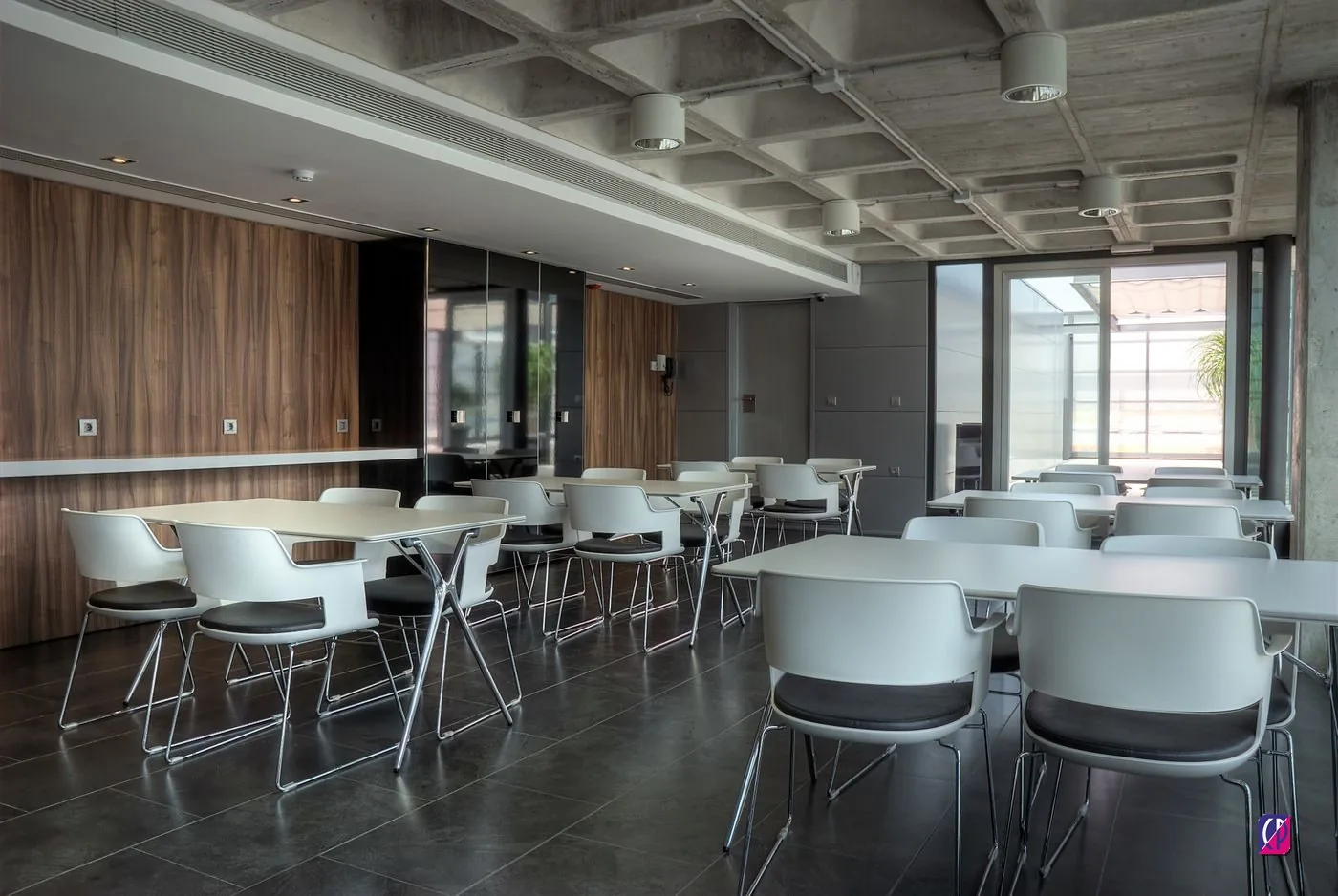
A corporate cafeteria or office pantry is running a food operation, but under a completely different set of constraints than a hotel or restaurant - high daily headcount, tight per-meal budgets, and a workforce that expects consistency over presentation flourish. This guide covers the packaging decisions specific to that environment.
Corporate cafeterias have a different brief than hospitality or retail
A hotel buyer optimises for guest-facing presentation; a corporate cafeteria buyer optimises for throughput, consistency and cost per meal across potentially hundreds or thousands of covers a day. That changes the priority order for packaging decisions - durability and stacking efficiency for high-volume trays and containers usually matter more than premium finish, since the audience is a captive daily workforce rather than a paying guest evaluating the experience. Our plates, bowls & trays range and takeaway container range both include formats sized for exactly this kind of high-throughput institutional service.
Meeting-room and conference catering: a distinct sub-category
Meeting and conference catering inside a corporate campus is its own packaging decision, separate from daily cafeteria service. These orders are typically smaller in volume per event but higher in presentation expectation - a client-facing boardroom order needs to look more considered than the daily staff lunch line, even if it's coming from the same kitchen. Stock a lighter, more presentable tier of disposables specifically for meeting-room and client-facing catering, rather than serving boardroom guests from the same bulk stock used for daily staff cafeteria service.
- Keep a separate, slightly higher-presentation packaging tier for meeting-room and client catering
- Size meeting catering by attendee count with a small buffer, similar to event catering practice
- Include napkins and cutlery formats appropriate to a boardroom setting, not just functional cafeteria stock
Vending and self-serve pantry packaging
Self-serve pantries and vending-adjacent food service - grab-and-go snacks, self-service beverage stations, unattended pantry counters - need packaging that survives handling without staff oversight. That means secure, tamper-evident closures where relevant, formats that don't require any assembly or special handling by the employee grabbing them, and clear labelling since there's no counter staff to answer questions about contents. Beverage service in particular benefits from simple, sturdy cup and lid combinations that don't require training to use correctly, since self-service stations see a wide range of user handling.
Budget discipline at large-campus scale
The economics of corporate cafeteria packaging are unforgiving at scale - a cost difference of even a fraction of a rupee per meal multiplies quickly across a large daily headcount over a full year, in a way it wouldn't for a smaller standalone restaurant. This makes standardising on a small number of well-chosen, durable formats more valuable than in most other food-service settings, since every SKU you add multiplies ordering complexity and inventory cost across a high-volume operation. Review your packaging spec periodically against actual daily headcount and consumption patterns rather than leaving a legacy format in place simply because it's always been ordered that way.
A quick checklist for corporate cafeteria packaging
- Prioritise durability and stacking efficiency for daily high-volume service
- Keep a separate, more presentable tier for meeting-room and client-facing catering
- Use tamper-evident, no-assembly formats for unattended vending and self-serve stations
- Standardise on a small number of durable formats to control cost at large-campus scale
- Review your packaging spec periodically against actual headcount, not legacy habit
For strategies to control packaging spend more broadly, see our guide to reducing packaging costs. And for cup and beverage sizing across a large office population, our cups & glasses buying guide covers hot and cold drink formats.
Related Content
Related Industries
Running a large office cafeteria?
Tell us your daily headcount and we'll help you standardise a packaging spec that controls cost at scale.