
Most container problems don't start with a bad product - they start with the wrong container being ordered in the first place. Before comparing suppliers or prices, it's worth working through capacity, material and how the pack behaves once it leaves your kitchen.
Start with your menu, not the catalogue
It's tempting to pick two or three "standard" container sizes and force every dish into them. In practice, that usually means your best-selling gravy item is either swimming in a too-large container (looks stingy, costs more per portion) or overflowing a too-small one (spills, complaints, refunds). Walk through your top 15–20 menu items by volume, note the actual fill volume for a standard portion, and match each to the closest container capacity rather than rounding up "to be safe." A container that's slightly too big costs you money on every single order over a year; a container that's too small costs you in leaks and reorders.
Our takeaway container range spans roughly 100ml through to 2,500ml across round, rectangular and reusable formats, which is usually enough spread to cover a full menu without over-ordering SKUs you'll rarely use.
Material choice: PP plastic, paper/bagasse or foil
The three material families cover most food-service needs, and each has a genuine use case rather than one being simply "better":
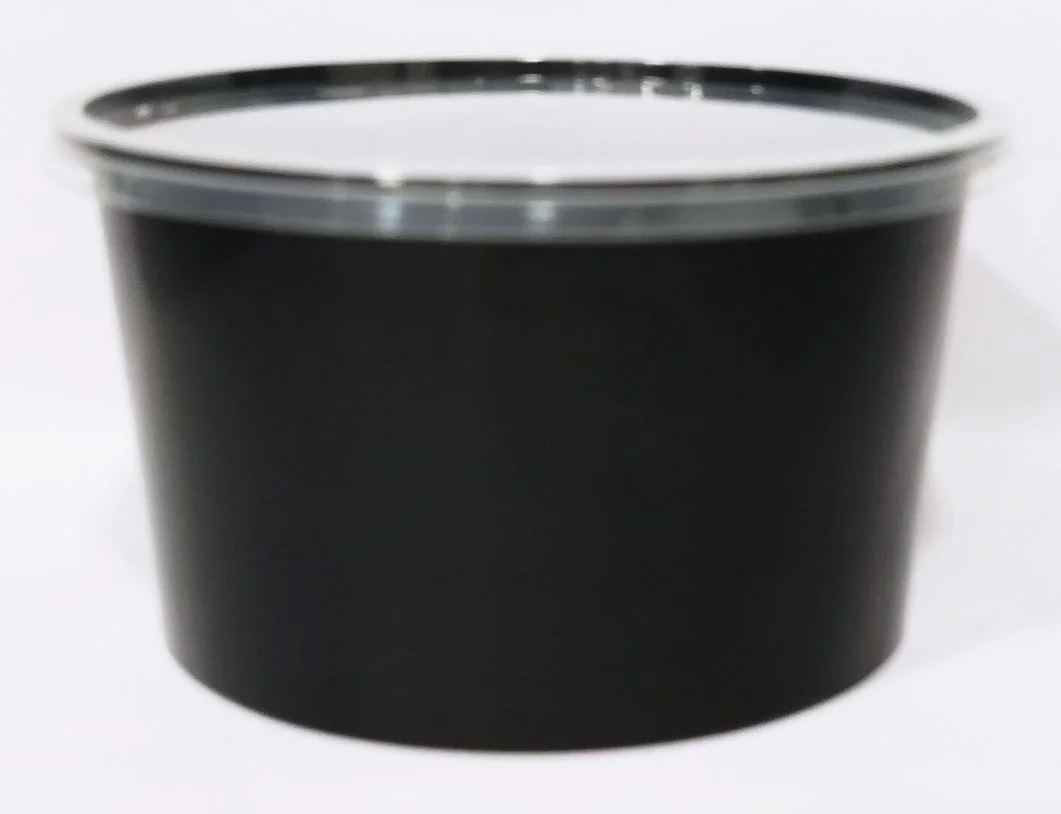
- PP (polypropylene) plastic is the default for wet, hot and oily food - curries, rice, gravies - because it holds its shape, seals reasonably well with a matching lid, and is generally more tolerant of hot food than lighter plastics. It's also the most cost-efficient option at high volume.
- Paper and bagasse suit dry or semi-dry items - sandwiches, snacks, salads with separate dressing - and appeal to businesses actively reducing plastic use. Our bagasse & areca leaf tableware range is a straightforward substitute for many plate and bowl formats, though it typically costs more per piece than an equivalent plastic container.
- Aluminium foil containers are the standard choice for anything going into an oven for reheating, or for catering-scale trays that need to survive stacking and transport in bulk. See our foil container range for oval, rectangular and round formats.
A lot of kitchens run all three side by side - plastic for the bulk of delivery orders, bagasse for a portion of the menu where sustainability messaging matters to guests, and foil for catering and oven-ready packs.
Leak-resistance and transit - non-negotiable for delivery
If a meaningful share of your orders travel by two-wheeler, leak-resistance stops being a nice-to-have. Look specifically at lid fit (does it snap or just rest on top?), whether the container has a lip or channel that helps the lid seal, and whether you've actually tested it tilted at 45 degrees with a wet-curry fill - not just sitting flat on a counter. A container that never leaks in the kitchen can still leak on a bike going over a speed bump. If your delivery complaint rate is trending toward damaged or leaking orders, it's worth reviewing container format before anything else in the packing process.
Stacking and storage practicality
Capacity and leak-resistance matter at the point of use; stacking matters everywhere else. Containers that nest cleanly when empty save real shelf and back-of-house space, and containers that stack securely when filled and lidded matter for multi-item orders and catering trays alike. If your kitchen is tight on storage, factor nesting height into your decision alongside capacity - two container options with identical fill volume can differ meaningfully in how much shelf space a case of them takes up.
Cost at volume: the real comparison
Unit price differences between container options often look small on a spec sheet but compound fast at volume - a difference of a rupee or two per piece adds up quickly across thousands of orders a month. But unit price in isolation can be misleading: a slightly cheaper container that leaks more often, or that customers perceive as flimsy, can cost more in complaints, refunds and reputational damage than the saving is worth. The more useful comparison is cost per successfully delivered order, not cost per container.
A quick checklist before you order
- Match container capacity to your actual top-selling menu items, not a rounded-up guess
- Choose material by what the item is (wet/hot, dry, or oven-bound) rather than by habit
- Test lid fit under transit conditions, not just on a flat counter
- Check nesting and stacking footprint against your storage space
- Compare cost per delivered order, not just cost per piece
If you'd rather talk it through than work it out from a spec sheet, our team can map your menu to the closest container sizes in our range and flag where a material switch might save money or reduce complaints.
Related Content
Related Industries
Need help choosing?
Send us your menu or product list and we'll help you shortlist the right container sizes and materials.