
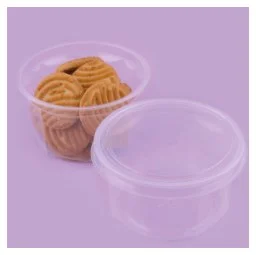
PP and PET are both common food-grade plastics, and buyers often use the names interchangeably without knowing what actually separates them. The short version: PP tends to suit hot, everyday food service, while PET tends to suit cold items and retail-facing packs where clarity matters. Here's the reasoning behind that, so you can apply it to your own use case rather than just take our word for it.
What is PP (polypropylene)?
Polypropylene is a workhorse plastic used across food-service packaging - takeaway containers, reusable tubs, some cutlery. It's typically semi-translucent to opaque rather than fully clear, which is part of why it's more associated with everyday takeaway and delivery packs than premium retail display. Our takeaway container range and food & beverage packaging range both include PP-based formats.
What is PET (polyethylene terephthalate)?
PET is the plastic most associated with clear bottles, punnets and retail-facing packs - it's valued for its glass-like clarity, which is why it turns up wherever a buyer wants the product itself to be visible: berries, cut fruit, bakery items, salads. Our agri & retail packaging range includes PET punnet boxes and clear round containers built specifically for this kind of visible, cold-chain-friendly packing.
Clarity and shelf appeal
This is where the two materials diverge most obviously. PET's transparency is close to glass, which is why it's the default choice whenever the product's own appearance is doing the selling - think a punnet of berries or a bakery cabinet display. PP is generally cloudier or fully opaque, which is perfectly fine for hot food service where the guest isn't judging the pack by looking through it, but a poor fit if you need the contents visible on a shelf.
Rigidity and heat tolerance
PP generally tolerates higher heat than PET, which is a large part of why it's the more common choice for hot-food containers, curries and anything going straight from a hot kitchen into a sealed pack. PET is more commonly used for cold and ambient-temperature items - cold beverages, bakery, produce - where heat resistance isn't the deciding factor. If you're unsure whether a specific container is rated for hot fill, it's worth checking with your supplier rather than assuming based on the material family alone, since wall thickness and container design also affect how a pack performs under heat.
Microwave safety considerations
Microwave suitability depends on the specific product, not just the base plastic - always check for a microwave-safe marking on the container itself rather than assuming based on whether it's "PP" or "PET." As a general pattern, PP containers are more often designed and marketed as microwave-safe for reheating, while PET is less commonly used for microwave-facing packaging. If a customer is likely to reheat the pack at home or in an office microwave, that's worth flagging when you're choosing between formats - and worth stating clearly on the pack if you know it's suitable.
Cost differences
Pricing varies by supplier, container design and order volume, so it's not possible to state a fixed rule here - but PP containers are generally positioned as the more cost-efficient option for high-volume, everyday takeaway use, while PET's added clarity typically carries a price premium suited to retail and display-facing applications where that clarity earns its keep.
How to decide for your use case
- Hot food, high delivery volume, cost-sensitive → PP is usually the better starting point
- Cold, retail-facing or display items where the product needs to be visible → PET is usually the better fit
- Reheating in a microwave is likely → confirm the specific product carries a microwave-safe marking rather than assuming by material
- Mixed menu → many kitchens run both, using PP for hot mains and PET-style clear packs for cold sides, desserts or retail add-ons
If you're weighing this decision for a specific product line, our team can talk through which of our PP or PET-based formats fit your actual use case, rather than guessing from a spec sheet.
Related Content
Related Products
Related Industries
Need help choosing?
Tell us what the pack needs to do - hot fill, cold display, delivery - and we'll point you to the right material.