
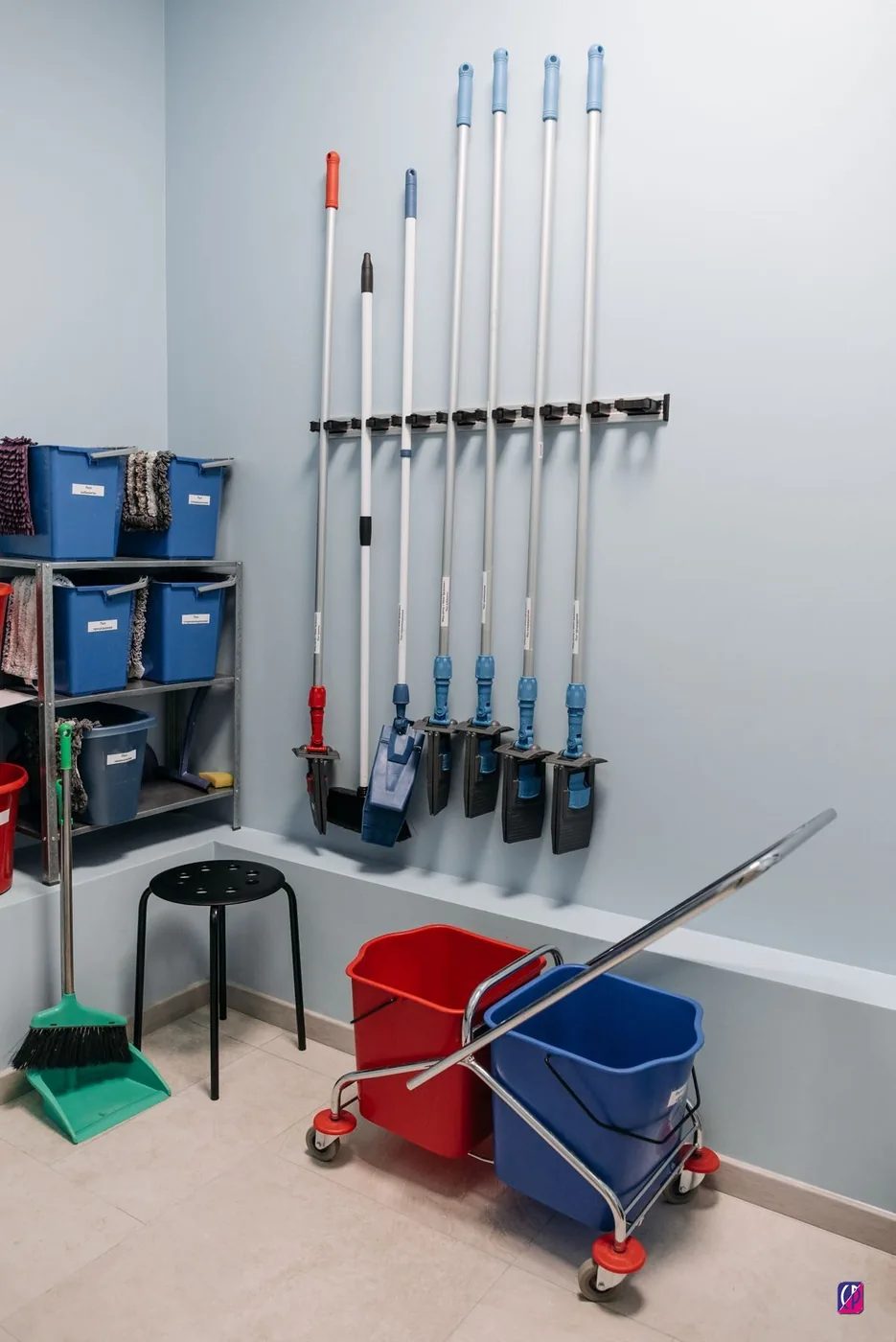
Cleaning supplies are one of the most under-specified categories in a commercial kitchen - reordered on habit rather than reviewed against what each area actually needs. The right mix of tools by task, and a realistic workflow for using them, matters more than buying the most expensive option across the board.
Match the tool to the surface and the mess, not a single default
A kitchen genuinely needs several different cleaning tool types, because a single mop-and-cloth combination doesn't handle everything well. Scrubbers and scour pads handle baked-on residue on pots and grills that a cloth alone won't shift; sponge wipes suit lighter daily surface cleaning; dusters handle dry dust and cobwebs in storage and dry-goods areas that a wet mop shouldn't touch. Standardising on one tool for every surface either under-cleans the tough spots or wastes a heavy-duty tool on light daily wiping. Our cleaning & housekeeping range covers mops, scrubbers, dusters, wipers and brooms as separate lines specifically because kitchens need this range rather than one all-purpose option.
Microfiber vs. standard cloths: where the extra cost pays off
Microfiber cloths cost more per piece than standard cotton or cellulose cloths, but they hold up to more wash cycles, lift grease more effectively without needing as much cleaning agent, and leave less lint on glass, steel and polished surfaces. That makes them worth the premium for front-of-house surfaces, display cabinets and steel equipment where finish matters - but for heavy back-of-house wiping (floors, grease traps, bulk spill cleanup) a standard cloth or wiper is often the more sensible, lower-cost choice since it's going to be discarded or heavily worn regardless of quality. Buying microfiber for every application usually overspends; buying standard cloths for guest-visible surfaces usually under-delivers on finish.
Mops, brooms and floor care by zone
Wet kitchen floors, dry storage areas and guest-facing floors all have different cleaning needs and, ideally, different tools to avoid cross-contaminating zones - a mop used in a raw-prep area shouldn't be the same one used near guest seating. Standard mops handle routine wet-floor cleaning; brooms handle dry sweeping in storage and back corridors where a wet mop isn't appropriate or necessary. Keeping tools zone-specific, even informally with colour-coding, reduces the risk of spreading contamination between raw-food areas and guest-facing or dry-storage zones.
A practical back-of-house cleaning workflow
Supplies alone don't create a clean kitchen - a workable routine does. A simple, sustainable structure most kitchens can run without much overhead: daily wipe-downs of prep surfaces and equipment with the appropriate cloth type, a scheduled deeper scrub of grills, fryers and floors on a fixed cadence (not "whenever there's time"), and a separate toilet and washroom routine using dedicated tools that never cross into food-prep areas. Where this breaks down in practice is usually restocking, not intent - a team runs out of scrubbers or mops mid-week and defers the deep clean rather than flagging the shortage. Treating cleaning supplies with the same restocking discipline as food inventory avoids this.
A quick checklist for cleaning and housekeeping supplies
- Stock separate tools for scrubbing, wiping and dry dusting rather than one all-purpose option
- Reserve microfiber for finish-sensitive, guest-visible surfaces; use standard cloths for heavy back-of-house cleaning
- Keep floor-care tools zone-specific to avoid cross-contamination between raw-prep, dry-storage and guest areas
- Set a fixed cadence for deep cleaning rather than an "as time allows" approach
- Restock cleaning supplies with the same discipline as food inventory to avoid deferred cleaning
For the hygiene and PPE side of back-of-house supply - gloves, caps and related essentials - see our hygiene and PPE buying guide. Our Malls & Corporate Offices page covers how we support housekeeping supply at scale for larger facilities.
Related Content
Related Products
Related Industries
Reviewing your cleaning supply range?
Tell us your kitchen zones and we'll help you shortlist tools that match each area's actual needs.