
Produce and retail packaging plays by different rules than food-service packaging - the priority shifts from presentation-at-the-table to keeping perishable goods intact through handling, transport and shelf display. This guide covers crates, punnets and the retail-facing side of agri packaging for grocery and produce businesses.
Crates: reusable vs single-use for produce handling
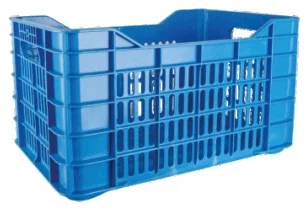
Reusable plastic crates are the standard for produce that moves through multiple handling stages - farm or wholesale market to distribution point to retail shelf - because they hold up to repeated stacking, washing and reuse far better than any single-use alternative, and the per-use cost drops significantly once a crate has been through even a modest number of cycles. The trade-off is upfront cost and a need for a return or reuse system, which works well for a business with a stable, repeatable supply chain but is less practical for one-off or highly variable sourcing. Our agri & retail packaging range includes reusable crates alongside single-use options for businesses that need more flexibility.
Punnet boxes and ventilation for fresh produce
Punnet boxes - the small, often ventilated boxes used for berries, cherry tomatoes and similar delicate produce - exist specifically to solve two problems single bulk packing can't: protecting delicate items from crushing under their own weight in a larger container, and allowing enough airflow to slow moisture buildup and spoilage. Ventilation matters more than it looks on a spec sheet - a sealed, non-vented punnet traps moisture around delicate produce and can accelerate spoilage compared to a properly vented one, even though a vented box looks less "sealed" and premium at first glance. Choose vented formats for anything genuinely moisture-sensitive, and reserve solid punnets for firmer produce where airflow matters less.
- Use vented punnets for soft, moisture-sensitive produce like berries and leafy items
- Size punnets to avoid stacking delicate produce more than one or two layers deep
- Reserve solid, non-vented formats for firmer produce where moisture buildup is less of a risk
Sizing produce packaging for shelf presentation
Retail produce packaging has to work at two different moments - surviving handling and transport, and looking appealing sitting on a shelf or counter for a customer to pick up. A container that's functionally fine but visually cluttered or oddly proportioned on a shelf can hurt sell-through even if the produce inside is perfectly good. Consider both dimensions when choosing formats - how the pack performs in the supply chain, and how it presents once it's sitting in front of a buying customer, since retail packaging is doing a selling job that back-of-house catering packaging never has to do.
Stacking and transit for bulk agri packaging
Crates and produce containers travel through more handling stages than most food-service packaging - loaded, transported, unloaded, stacked in cold storage, restocked onto shelves - and each stage is an opportunity for damage if the format doesn't stack securely and consistently. Test your chosen crate or box format under a realistic full-load stack, including how it behaves when the load underneath isn't perfectly uniform, since real-world stacking rarely matches a clean warehouse test.
A quick checklist for agri and retail packaging
- Choose reusable crates for stable, repeatable supply chains; single-use for flexible or variable sourcing
- Use vented punnets for moisture-sensitive produce and check stacking depth for delicate items
- Balance transport performance against shelf presentation when choosing retail formats
- Test stacking stability under realistic, non-uniform load conditions before a bulk order
For carry bags used alongside produce packaging at retail counters, see our carry bags & retail bags guide. And for storage practices that apply to bulk agri stock as much as any other packaging category, our storage & handling guide covers that ground.
Related Content
Sourcing crates or produce packaging?
Tell us your produce range and handling chain and we'll help you shortlist formats.