
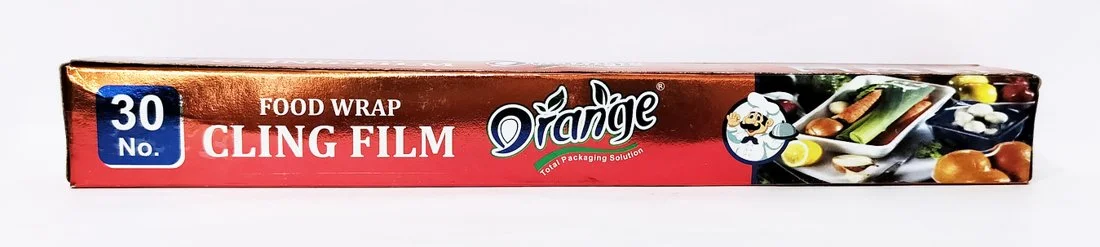
Cling film is one of the most-used items in any commercial kitchen and one of the least thought about - it's usually just "the roll by the prep station." But how it's used and stored has a direct food-safety impact, and small habits around it are worth getting right. This is a kitchen food-safety guide, distinct from the sustainability angle covered in our compostable packaging guide.
Cling film's actual job in a commercial kitchen
Cling film's core function is creating a temporary, close-contact seal over prepped food - bowls of chopped ingredients, marinating trays, portioned dough, half-used produce - to slow moisture loss and reduce exposure to airborne contamination during storage, prep and short-term holding. It's not a substitute for proper sealed containers on anything going into long-term cold storage, and it's not designed for direct contact with very hot food straight off the stove. Used for its actual job - short-to-medium-term covering of prepped or portioned items in fridge or prep-station storage - it's a genuinely useful, low-cost tool. Our cling film and food wrap range covers standard catering-width rolls suited to this kind of daily kitchen use.
Storage: heat, direct sunlight and the shelf-life of a roll
Cling film performance degrades with poor storage conditions faster than most kitchen staff expect. Heat near a stove, grill or oven can soften the film and make it harder to dispense cleanly or cause it to stick to itself in the box; direct sunlight and prolonged heat exposure can also affect how reliably the film clings and seals over time. Store rolls away from direct heat sources and out of direct sun, in a dry area near - but not directly beside - the prep stations where they're used most. A roll that's been sitting next to a hot line for weeks will perform noticeably worse than one stored properly, even if it looks fine.
- Store rolls away from ovens, grills and other direct heat sources
- Keep rolls out of direct sunlight and in a dry storage area
- Use dispenser boxes with the cutting edge intact - a damaged box edge leads to messier, less hygienic tearing
- Rotate stock so older rolls get used before newer ones, especially in high-volume kitchens
Common misuse that causes contamination risk
The most common mistake is treating cling film as airtight when it isn't - a loosely wrapped bowl still allows some air and odour transfer, which matters for strong-smelling ingredients stored near delicate ones. The second common mistake is reusing a torn or previously-used sheet of film to save cost, which reintroduces whatever contamination was on the surface it last touched. The third is wrapping food that's still hot straight off the stove, which can cause the film to soften, stick unevenly, or in some cases affect the seal quality - food should generally be cooled to a safe handling temperature before being wrapped for storage, not wrapped hot to "save a step."
Cling film vs food-wrap rolls vs butter paper
These three get used interchangeably in some kitchens, but they're suited to different jobs. Cling film is best for temporary covering of bowls, trays and portioned items in the fridge. Food-wrap rolls (often a slightly heavier-gauge plastic film) suit direct wrapping of items like sandwiches or bakery goods that need to travel or be handled more, since they hold up to more direct contact than cling film. Butter paper is the right choice for anything high in fat or oil, since plastic films can interact poorly with oily surfaces over time, while grease-resistant paper is built specifically for that contact. Stocking all three and using each for its intended job, rather than defaulting to whichever is closest to hand, reduces both waste and contamination risk.
A quick checklist for cling film and food wrap
- Store rolls away from heat and direct sunlight, in a dry area
- Never reuse a torn or previously-used sheet of film
- Cool hot food before wrapping, rather than wrapping it straight off the stove
- Use the right wrap for the job - cling film for temporary covering, food-wrap for handling, butter paper for oily items
- Rotate stock so older rolls are used first, particularly in high-turnover kitchens
For the compostable and sustainability side of food-wrap choices, see our bagasse and compostable packaging guide. And for broader storage practices across your packaging inventory, our storage and handling guide covers the warehousing side.
Related Content
Related Products
Related Industries
Restocking your prep-station supplies?
Send us your kitchen volume and we'll help you work out roll sizes and a sensible restocking cadence.